Norton Juxta Kempsey CofE Primary School
RE
The Right of Withdrawal from Religious Education
In the UK, parents still have the right to withdraw their children from RE on the grounds that they wish to provide their own RE. This provision will be the parents’ responsibility. This right of withdrawal exists for all pupils in all types of school, including schools with and without a religious designation. Students aged 18 or over have the right to withdraw themselves from RE. Parents also have the right to withdraw their child from part of RE and can do so without giving any explanation. Teachers also have the right to withdraw from the teaching of RE. However, this does not apply to teachers who have been specifically employed to teach or lead RE. If a teacher wishes to withdraw from the teaching of RE, a letter requesting this must be submitted to the head of the school and its chair of governors. If a teacher withdraws from the teaching of RE, the school must still make provisions for the pupils to receive their entitlement to RE.
At Norton Juxta Kempsey School we believe that Religious Education helps all children, irrespective of their own religious beliefs, understand the world around them and the communities in our world. We wish to be an inclusive community but recognise that parents have the legal right to withdraw their children from RE on the grounds of conscience. However, the right of withdrawal does not extend to other areas of the curriculum when, as may happen on occasions, spontaneous questions on religious matters are raised by pupils or there are issues related to religion that arise in other subjects such as history and citizenship.
Any request from a parent for the withdrawal from RE must be made to the Headteacher. All requests will be granted, and parents are under no obligation to provide a reason for their decision. Once a request has been received and granted by the headteacher, parents may be offered an opportunity to discuss the nature of RE within school, to support the school’s understanding of the parents’ decision. We would welcome the opportunity to talk with you about Religious Education in the school. Parents are under no obligation to take up this offer, and it is not conditional on a request for withdrawal being granted. Should parents take up the offer of a discussion, the school may seek to establish the religious issues about which the parent objects to their child being taught.
If pupils are withdrawn from RE, schools have a duty to supervise them, though not to provide additional teaching or to incur extra cost. Pupils will usually remain on school premises.
RE Statement of Entitlement
RE intent, implement, impact
Vision for RE
Together, with the love and joy of God, we will discover, develop & maximise our unique potential.
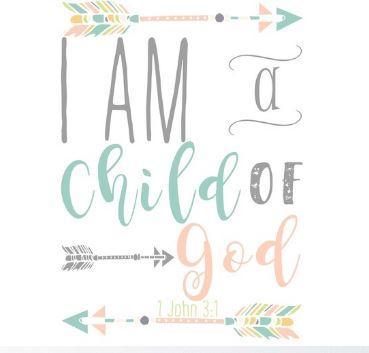
The Father has loved us so much! He loved us so much that we are called children of God. And we really are his children. – 1 John 3:1 – ICB
How does the teaching of Religious Education underpin the Christian vision of the school?
The value of love is at the heart of both the Christian faith and our vision here at NJK. God’s love for all people inspires us to give love in abundance. We value and care for ourselves, others and the world around us as God's creation; demonstrating our values of friendship, compassion, forgiveness and respect. We believe this is of the highest importance when teaching RE to enable pupils to explore their differences with tolerance and mutual respect. RE in this school contributes to the outworking of our vision by ensuring that as a school we create safe learning environments in which the children feel able to express their opinions and view without judgement. As a school we ensure that children and adults feel as though they can talk about Christianity and other world religions in the way that Jesus taught us all to love one another. Our school vision is integral to everything we do at NJK. We want to discover and maximise each child’s unique potential. We aim to deliver a joyful and inspiring curriculum and school experience where every child feels loved, valued and cherished.
Our RE curriculum specifically contributes to our distinctively Christian character and provides children with the opportunity to explore our Christian values and flourish as citizens in a pluralistic and global community.
NJK's RE Curriculum Intent:
Through our Religious Education curriculum we aim to :
-
engage pupils in enquiring into and exploring questions arising from the study of religion and belief, so as to promote their personal, spiritual, moral, social and cultural development.
-
provide learners with knowledge and understanding of Christianity and other principal religious traditions and beliefs represented in Great Britain.
-
develop their understanding of the ways in which beliefs influence people in their behaviour, practices and outlook.
-
enable learners to apply the insights of the principal religious traditions to their own search for identity and significance.
-
enable learners to become aware of their own beliefs and values and to have a positive attitude to the search for meaning and purpose in life.
-
encourage learners to develop a positive attitude towards other people who hold religious beliefs different from their own.
What does RE look like at NJK?
|
RE Places of Worship visit & visitors Schedule |
|||
|
Year group |
Term |
Unit of work |
Visit / visitor |
|
EYFS |
Term 3.1 |
What places are special and why? |
VISIT ST JAMES CHURCH |
|
Year 1 |
Term 2.1 /2.2 |
Who is Jewish and how do they live? |
VISIT SINGERS HILL SYNAGOGUE |
|
Year 2 |
Term 2.1 |
Who is a Muslim and how do they live? |
VISIT WORCESTER MOSQUE |
|
Year 3 |
Term 3.1 |
What kind of world did Jesus want? Gospel |
CLERGY VISIT |
|
Year 4 |
Term 2.1 |
What does it mean to be Hindu in Britain today? |
VISIT HINDU TEMPLE Shri Venkateswara (Balaji) |
|
Year 5 |
Term 2.1 |
What does it mean to be a Muslim in Britain today? |
VISIT BIRMINGHAM Central MOSQUE |
|
Year 6 |
Term 1.1 |
Creation and science: conflicting or complementary? CREATION/FALL |
MRS MORGAN VISIT Christian Scientist |
Inter Faith week November 2022
This year, for Inter Faith week we focused on how different faiths use 'texts' / 'special books' to guide people in their everyday life. We invited people of faith to come into our school and share with us their faith and their special books. We welcomed visitors from the Jewish, Muslim and Christian faith.
We registered our school event on the Inter Faith week activities map and we were the only school in the whole of Worcestershire to be holding an event!
Yvonne Stollard shared the Jewish Bible and her Torah as the Jewish special book.


In Key Stage One the pupils learnt about the Creation story and how Jewish people celebrate Shabbat every week to remember God's day of Rest.
In Key Stage Two the pupils learnt that the stories in the Old Testament in the Bible are the same as the Jewish Bible, also called 'The Tanakh.' The pupils learnt why Jewish people have a Mezuza on their door post and the special prayer inside - the Sh'ma. The pupils enjoyed looking at both the Hebrew and English writing of this prayer.
Fahmida Connaghan shared the Qur'an as the Muslim holy book.


Mrs Connaghan uses the Qur'an like a road map to help her live a good life as a Muslim.
She shared some important information with us about the Qur'an......
﴿The Islamic holy book
﴿Angel Jibreel (Gabriel) spoke the words of Allah to the Prophet Muhammad (Peace Be Upon Him) and the result is known as the Quran
﴿It was revealed in stages to the Prophet Muhammed (PBUH) over 23 years
﴿Revealed during Ramadan in a cave in 610 AD
﴿The Qur’an was revealed in Arabic and is still in the original script, it has not been changed
﴿There are 114 chapters in the Qur’an, these are called Surahs
﴿Muslim children and adults are taught to read the Qur’an
﴿The Islamic holy book
﴿Angel Jibreel (Gabriel) spoke the words of Allah to the Prophet Muhammad (Peace Be Upon Him) and the result is known as the Quran
﴿It was revealed in stages to the Prophet Muhammed (PBUH) over 23 years
﴿Revealed during Ramadan in a cave in 610 AD
﴿The Qur’an was revealed in Arabic and is still in the original script, it has not been changed
﴿There are 114 chapters in the Qur’an, these are called Surahs
﴿Muslim children and adults are taught to read the Qur’an.
Mrs Connaghan shared her prayer mat and prayer beads with us.
Clare Morgan shared many different versions of the Bible with the pupils to explore why the Bible is important to her Christian faith.